More resources

Explore beyond the stories

A collection of resources to explore these topics beyond the stories on this website. Reliable, accessible information for students, families, educators and anyone interested in learning more about neurodiversity.

Our Mission in Numbers

Statistics on the importance of neurodiversity awareness for youth.

View the infographic
Understanding Neurodiversity

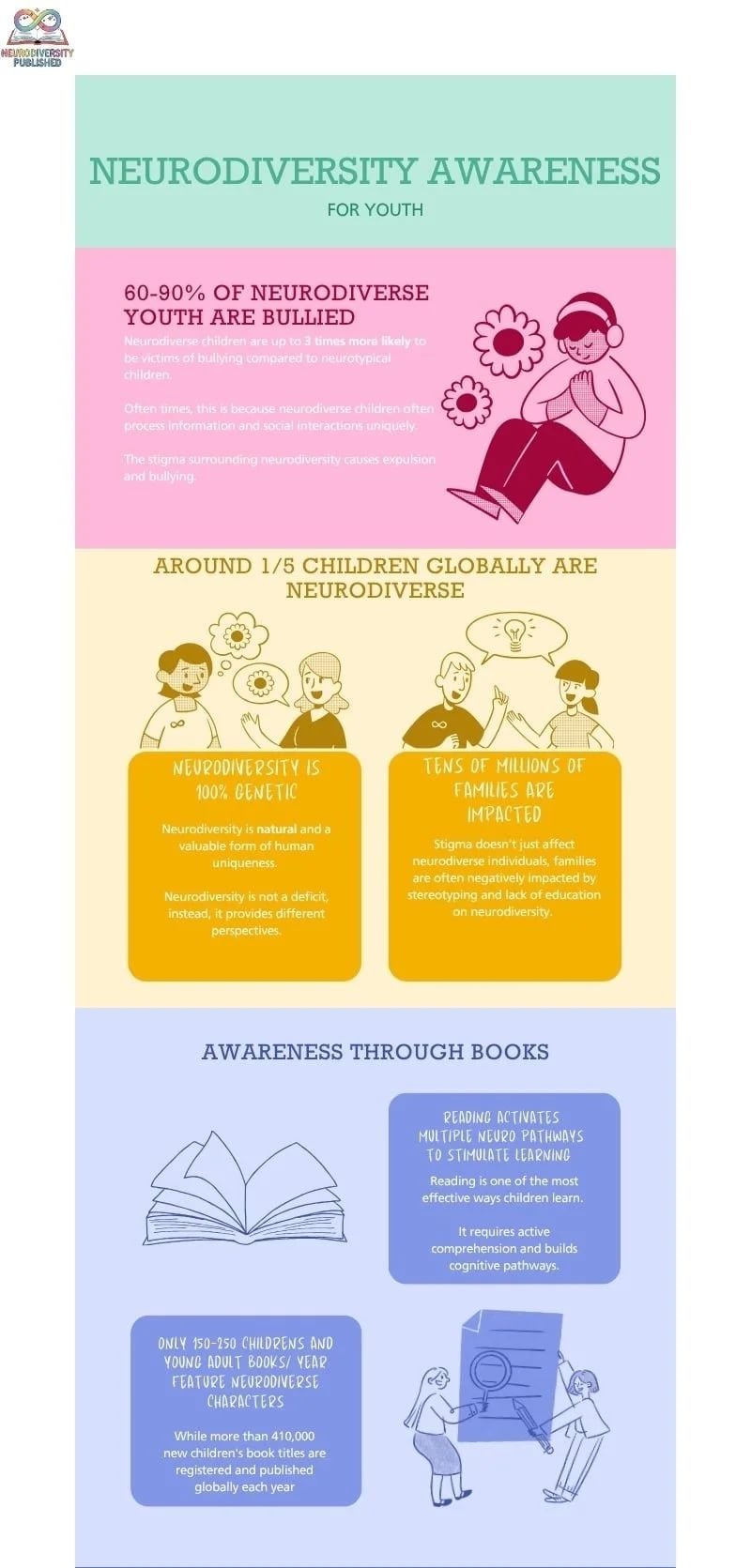
Different minds, one wonderful world. What neurodivergent means, what autism is, and a note for parents and caregivers.

View the infographic
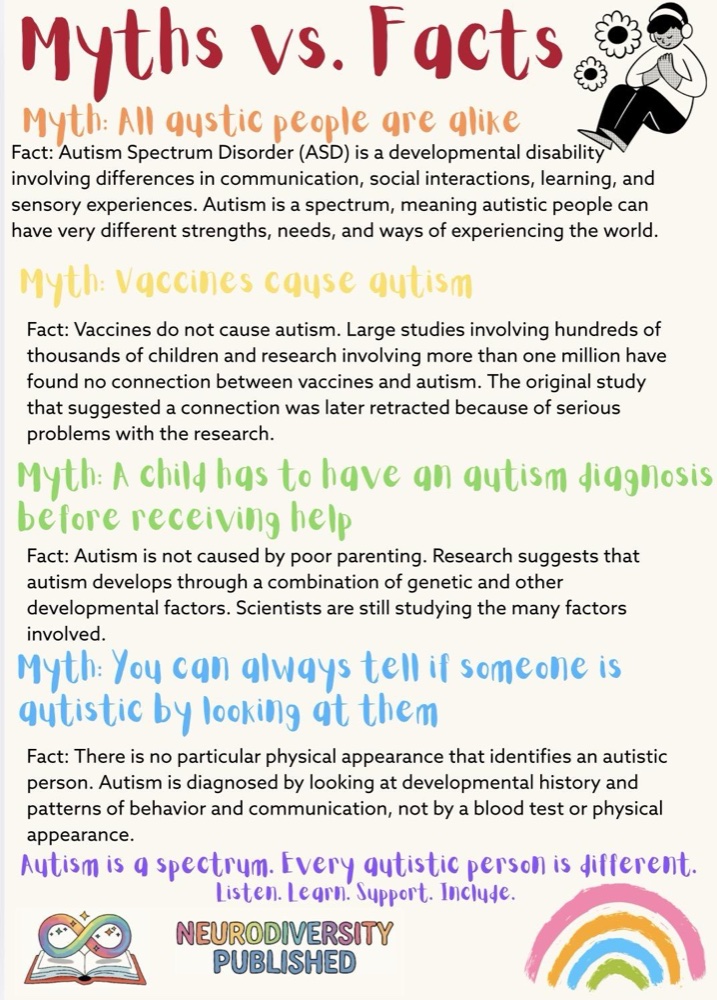
Myths vs. Facts

Four common myths about autism, and what the research actually says. Autism is a spectrum: every autistic person is different.

View the infographic
Exploring Recovery in Autism and Optimal Outcomes

Autism Spectrum Disorder (ASD) is a complex neurological condition characterized by difficulties in social interactions, communication, and repetitive and unusual behaviors.

Read the article
Infographic

Our Mission in Numbers

Neurodiversity awareness for youth, made by Eleanor Wang.

The key figures

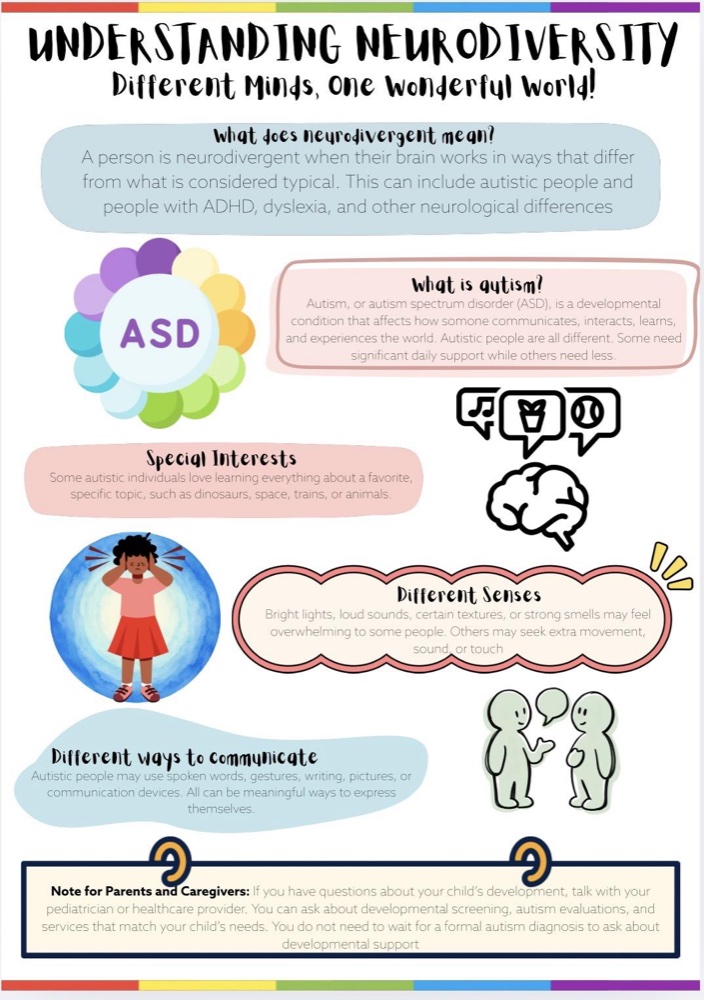
  • 60–90% of neurodiverse youth are bullied. Neurodiverse children are up to three times more likely to be victims of bullying than neurotypical children, often because they process information and social interactions uniquely.
  • 1 in 5 children globally are neurodiverse. Neurodiversity is natural and a valuable form of human uniqueness. It is not a deficit; it provides different perspectives.
  • Tens of millions of families are impacted. Stigma does not just affect neurodiverse individuals. Families are often negatively affected by stereotyping and a lack of education on neurodiversity.
  • 150–250 children's and young-adult books a year feature neurodiverse characters, while more than 410,000 new children's book titles are registered and published globally each year.
  • Reading activates multiple neural pathways to stimulate learning. It is one of the most effective ways children learn, requiring active comprehension and building cognitive pathways.
Infographic: Neurodiversity awareness for youth. 60 to 90 percent of neurodiverse youth are bullied, up to three times more than neurotypical children. Around 1 in 5 children globally are neurodiverse. Neurodiversity is 100 percent genetic, and tens of millions of families are impacted by stigma. Reading activates multiple neural pathways, yet only 150 to 250 children's and young adult books a year feature neurodiverse characters, out of more than 410,000 new children's titles published each year.
Made by Eleanor Wang.
Infographics

Take-home sheets

The two sheets we hand out at resource fairs and readings. Print them, share them, pin them to a classroom wall.

Infographic: Understanding Neurodiversity. Different minds, one wonderful world. What does neurodivergent mean? A person is neurodivergent when their brain works in ways that differ from what is considered typical. This can include autistic people and people with ADHD, dyslexia, and other neurological differences. What is autism? Autism, or autism spectrum disorder (ASD), is a developmental condition that affects how someone communicates, interacts, learns, and experiences the world. Autistic people are all different. Some need significant daily support while others need less. Special interests: some autistic individuals love learning everything about a favorite, specific topic, such as dinosaurs, space, trains, or animals. Different senses: bright lights, loud sounds, certain textures, or strong smells may feel overwhelming to some people. Others may seek extra movement, sound, or touch. Different ways to communicate: autistic people may use spoken words, gestures, writing, pictures, or communication devices. All can be meaningful ways to express themselves. Note for parents and caregivers: if you have questions about your child's development, talk with your pediatrician or healthcare provider. You can ask about developmental screening, autism evaluations, and services that match your child's needs. You do not need to wait for a formal autism diagnosis to ask about developmental support.
Understanding Neurodiversity.
Infographic: Myths vs. Facts about autism. Myth: all autistic people are alike. Fact: autism spectrum disorder (ASD) is a developmental disability involving differences in communication, social interactions, learning, and sensory experiences. Autism is a spectrum, meaning autistic people can have very different strengths, needs, and ways of experiencing the world. Myth: vaccines cause autism. Fact: vaccines do not cause autism. Large studies involving hundreds of thousands of children and research involving more than one million have found no connection between vaccines and autism. The original study that suggested a connection was later retracted because of serious problems with the research. Myth: a child has to have an autism diagnosis before receiving help. Fact: autism is not caused by poor parenting. Research suggests that autism develops through a combination of genetic and other developmental factors. Scientists are still studying the many factors involved. Myth: you can always tell if someone is autistic by looking at them. Fact: there is no particular physical appearance that identifies an autistic person. Autism is diagnosed by looking at developmental history and patterns of behavior and communication, not by a blood test or physical appearance. Autism is a spectrum. Every autistic person is different. Listen. Learn. Support. Include.
Myths vs. Facts.
Get in touch

Know a resource we should add?

Feel free to contact us if you have any questions or would like to partner with us.